
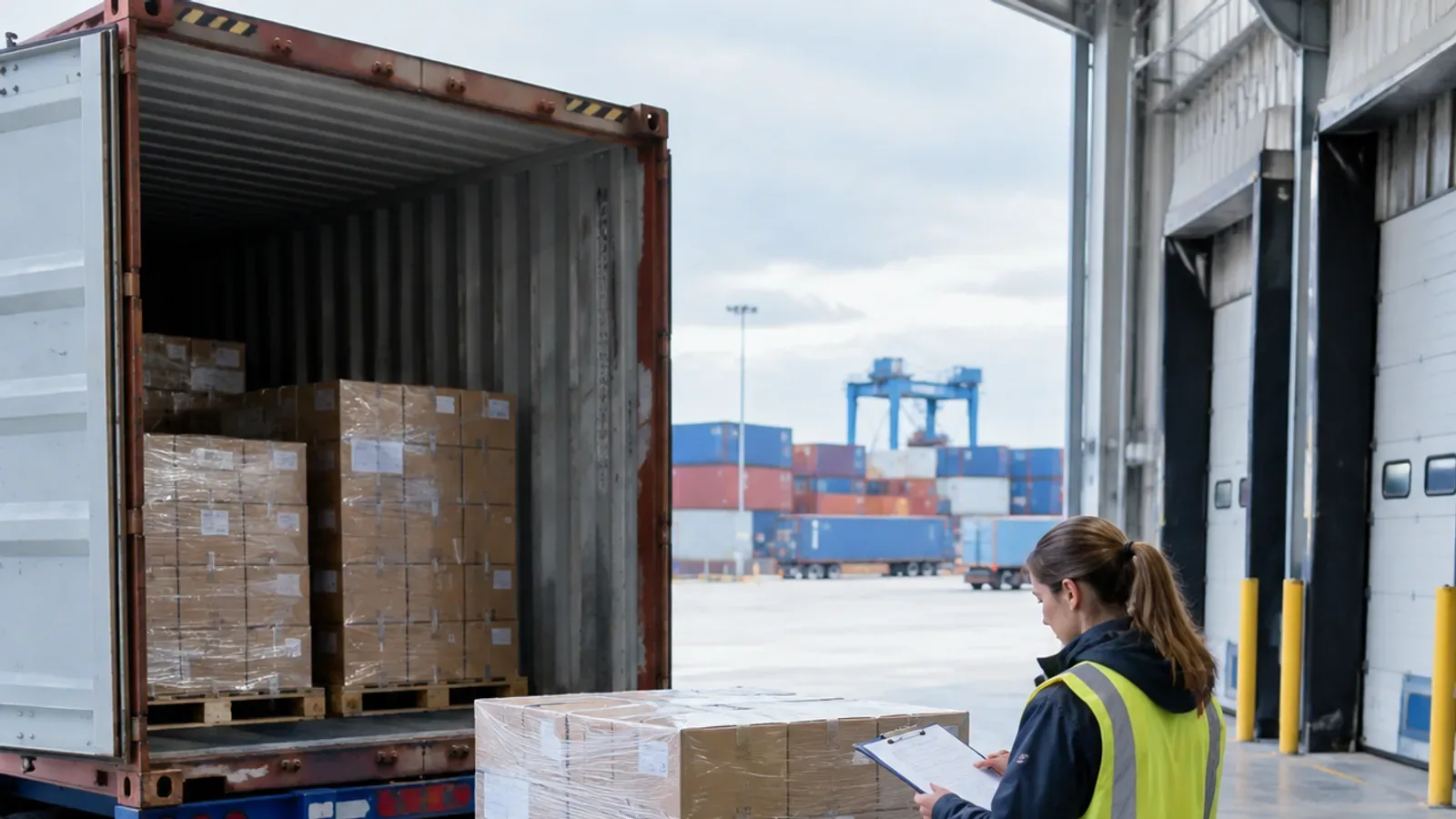
Direct answer: Plan Canadian drayage and final-mile delivery to a 3PL as a controlled chain: confirm the importer and customs release, verify terminal or CFS availability, book the right equipment, confirm the 3PL receiving window, dispatch with matched references, and close with proof of delivery plus receiving reconciliation. A vessel arrival, CARM account or delivery address alone does not prove that cargo is released, available, accepted or counted.
This guide is for sellers, importers, customs brokers, forwarders, carriers and 3PL receiving teams moving China-origin inventory through a Canadian gateway. It covers operating controls rather than a guaranteed transit time, customs ruling, duty result or carrier quote. Reviewed 11 October 2026. Recheck the shipment-specific instructions before dispatch.
Key facts before you book a Canadian delivery
| Control point | Evidence to hold | Stop condition |
|---|---|---|
| Import and release | Importer, broker, entry or release reference, hold status and responsible contact | Release or authorized movement is unclear |
| Gateway availability | Terminal or CFS availability, pickup number, cutoff and free-time dates | Availability is an estimate or the cutoff has passed |
| Equipment | Container, chassis, truck type, weight, dimensions and handling limits | Weight, height or equipment fit is unknown |
| 3PL acceptance | Address, hours, appointment, labels, pallet rules and receiver contact | The warehouse has not accepted the load profile |
| Closeout | Proof of delivery, count, condition, discrepancy and receiving acknowledgement | Delivered quantity cannot be reconciled |
The North America 3PL receiving path is the destination control. It does not replace the Canadian import file or a carrier’s physical pickup instructions. Keep the legal importer, customs broker, freight forwarder, ocean or rail carrier, drayage provider and 3PL as separate roles with named owners.
1. Define the delivery outcome and work backward
Start with the actual receiving outcome: inventory delivered to a named Canadian 3PL, accepted under its inbound reference, and available for the next FBA or DTC handoff. Record the required date range, receiving hours, appointment method, pallet or floor-load rules, label format, carton limits and the person who monitors check-in. A port arrival date is only an input to this plan.
Build the timeline backward through supplier completion, export movement, vessel or rail arrival, customs processing, release, terminal availability, pickup, drayage, possible transload, 3PL appointment, unloading, count and receiving acknowledgement. Add a time zone and evidence owner to each milestone. Mark estimates separately from confirmed events, then recalculate downstream dates whenever release or warehouse capacity changes.
The China-to-Canada intake route provides lane context, but the carrier or forwarder must state where its scope ends. A delivered quote may exclude terminal storage, chassis, wait time, appointment booking, pallet exchange, re-delivery, liftgate service or receiving labor. Ask for those inclusions and exclusions in writing.
2. Confirm the importer and Canadian release state
Before a truck is dispatched, identify the importer of record, customs broker or filer, carrier, terminal or CFS, drayage provider and receiving 3PL. The Canada Border Services Agency importing guide explains the commercial-import context and record responsibilities. It does not authorize a particular truck, warehouse or delivery movement.
Use the current CBSA CARM / GCRA guidance to keep account, payment and delegation questions with the importer and broker. A CARM account or delegation record is not the same as shipment release. Ask the responsible customs party to state the release reference, entry status, examination or document hold, and any condition that affects removal or delivery.
For release mechanics, consult the current CBSA Memorandum D17-1-5 and the shipment-specific broker instruction. Do not infer clearance from an arrival notice, a terminal appointment, an emailed commercial invoice or a warehouse address. If the status is ambiguous, place the pickup on hold and escalate to the importer and broker.
3. Map the gateway and drayage handoffs
Write the physical chain in one line: port or rail terminal, CFS if applicable, container or chassis, drayage truck, transload or cross-dock, outbound vehicle and 3PL dock. State whether the container is delivered intact, stripped at a CFS, or handled at another approved facility. Record who supplies the chassis, unloading labour, pallets, stretch wrap, seal checks, photos and count sheet.
Capture the container number, bill or delivery reference, pickup number, terminal availability, last free day, last receiving time, driver contact and equipment assumptions. Ask who owns a missed appointment, terminal closure, chassis shortage, storage bill or redelivery. The answer must be tied to the booking or provider scope; it should not be reconstructed after a charge appears.
Use exact physical facts. Record floor-loaded or palletized status, pallet count, maximum height, gross weight, carton count, cube and any handling restriction. If the load includes batteries, dangerous goods, oversized pieces or temperature-sensitive products, stop and obtain the applicable carrier, 3PL and regulatory acceptance before dispatch. This guide does not determine product admissibility.
4. Prepare the 3PL receiving appointment
Send one controlled delivery brief to the carrier and receiver. Include the 3PL legal name and address, dock hours, appointment contact, inbound reference, purchase order, SKU and unit totals, carton and pallet count, weights and dimensions, labels, driver instructions, required date range and exception contact. Ask the 3PL to confirm that the load profile fits its dock and storage plan.
The Canada CARM-to-warehouse intake guide helps connect entry evidence to a receiving handoff, while the inbound readiness checker surfaces missing operational fields. Neither resource grants customs release or an appointment. The receiver’s current routing guide and written confirmation control its acceptance rules.
Separate an appointment request from an appointment confirmation. Keep the confirmation number, requested window, confirmed window, cancellation rule and the person watching changes. If the 3PL changes its hours or destination, freeze the affected load and recheck carrier instructions, labels, customs records and required dates before rebooking.
5. Dispatch with a matched reference set
Before dispatch, compare the controlled delivery brief with the terminal record, broker release, carrier booking and 3PL appointment. A container number, bill number, purchase order, FBA shipment reference and warehouse inbound number may all refer to the same goods while serving different systems. Cross-reference them without treating one identifier as proof of another event.
Use the current Amazon FBA shipment requirements and Send to Amazon workflow for account-side labels, shipment data and packing instructions. Those pages can require sign-in and account-specific confirmation; they do not decide Canadian customs status or replace the 3PL’s routing guide.
Photograph the seal, exterior condition, pallet labels and any visible damage at the handoff. Record pickup time, driver or carrier, equipment number and the next milestone. If the carrier reports a different weight, pallet count, destination or delivery window, stop the affected move until the owner approves a versioned change.
6. Control exceptions from terminal to dock
| State | Use when | Minimum evidence |
|---|---|---|
| Ready for pickup | Release, terminal window, equipment and 3PL appointment are confirmed. | Release reference, pickup number, cutoff, scope and owner. |
| Conditional | A bounded variance can be isolated without hiding its impact. | Exception, affected quantity, owner, deadline and cost exposure. |
| Hold | Release, destination, cargo identity, equipment or acceptance is unknown. | Reason, physical control point, escalation and next decision time. |
| Closed | Delivery and receiving evidence reconcile to the dispatched load. | Proof of delivery, count, discrepancy result and archive link. |
Common exceptions include an unavailable container, a missed terminal cutoff, chassis shortage, unexpected storage, overweight or over-height cargo, damaged packaging, an early or late truck, a rejected appointment and unidentified cartons. Record the event, location, timestamp, affected units, photographs, responsible party and next action. The appointment and rejection recovery playbook is useful when a receiving window fails, but it does not transfer liability to the carrier or warehouse.
Do not use conditional handling to bypass an unresolved customs release, an unknown importer, a materially different destination, an unsafe equipment assumption or missing product acceptance. A visible hold protects the shipment record better than a clean schedule that conceals a gap.
7. Canadian drayage release checklist
- Importer, broker, carrier, terminal, drayage provider and 3PL roles are named.
- CBSA release or authorized movement is confirmed by the responsible customs party.
- CARM, payment, delegation, examination and document questions have an owner.
- Container, bill, pickup, terminal, chassis and free-time references are current.
- Truck type, weight, dimensions, pallet height and handling restrictions are accepted.
- 3PL address, hours, appointment, labels, inbound reference and routing guide are confirmed.
- Cartons, units, pallets, purchase order and shipment references reconcile.
- Storage, wait, chassis, cancellation and re-delivery assumptions are written.
- Damage, shortage, overage and unidentified-carton actions have owners and deadlines.
- Proof of delivery, receiving count and discrepancy closure are assigned before dispatch.
Keep the completed checklist with the commercial invoice, packing list, release evidence, booking, appointment confirmation, handoff photographs and receiving record. The North America inbound plan form can collect shipment facts for a scoped review; do not send passwords or unnecessary personal data.
Limitations and shipment-specific review
This guide cannot determine tariff classification, customs value, duty, tax, admissibility, CARM account status, carrier capacity, terminal policy, 3PL acceptance, Amazon routing, FBA fees or when inventory becomes sellable. CBSA, the importer, broker, carrier, terminal, 3PL and Amazon control different facts. Recheck their current written direction whenever the product, route, quantity, equipment, destination or required date changes.
Frequently asked questions
What is drayage in a Canadian 3PL delivery plan?
Drayage is the short-haul movement between a port, rail terminal, container freight station or other gateway handoff and the next facility. The actual scope may include pickup, chassis, appointment, waiting, storage, transload or delivery, so the provider must define what is included for the shipment.
Can a truck pick up cargo before customs release?
Do not assume it can. The importer, broker and carrier must confirm whether the shipment is released, bonded, in-bond or subject to another authorized movement. A CARM login, arrival notice or terminal availability message is not by itself a release instruction.
What should a 3PL confirm before accepting imported inventory?
Confirm the receiving entity, address, hours, appointment method, pallet and carton rules, reference format, unloading capability, labels, quantity expectations, exception contact and acceptable delivery window. Ask what happens when a load is early, late, damaged, over or unidentified.
Who pays storage or re-delivery after a missed appointment?
The booking, provider scope and event record control that question. Write down free-time expiry, storage rates, equipment responsibility, appointment waiting, cancellation, re-delivery and approval authority before dispatch. Do not infer liability from a generic delivered price.
Does delivery to a Canadian 3PL mean FBA inventory is received?
No. Delivery is a carrier milestone. The 3PL still needs to record arrival, count, condition, labels, discrepancies and receiving-system acknowledgement. Keep proof of delivery separate from the final accepted or usable quantity.
What changes require a new drayage check?
Recheck when the importer, release status, terminal, container, equipment, weight, pallet height, destination, appointment, product handling requirement or required date changes. Hold the affected load until the responsible party confirms the revised scope and references.
Official sources and review notes
- CBSA: Guide to importing commercial goods into Canada
- CBSA: CARM / GCRA
- CBSA: Memorandum D17-1-5, Release Procedures
- World Customs Organization
- Amazon Seller Central: FBA shipment requirements
- Amazon Seller Central: Send to Amazon shipment workflow
Official sources opened 11 October 2026: The CBSA importing, CARM and release pages, WCO reference page and Amazon Seller Central shipment pages were reopened before drafting. The brief’s Jingsourcing, BY56, CIFNEWS and 亿邦动力 URLs were discovery-only and were not used as customs, tariff, carrier or platform evidence.
Change log
11 October 2026: Created a Canada-specific drayage and final-mile delivery workflow with release-state controls, gateway and equipment checks, 3PL appointment preparation, matched references, exception ownership and receiving reconciliation.