
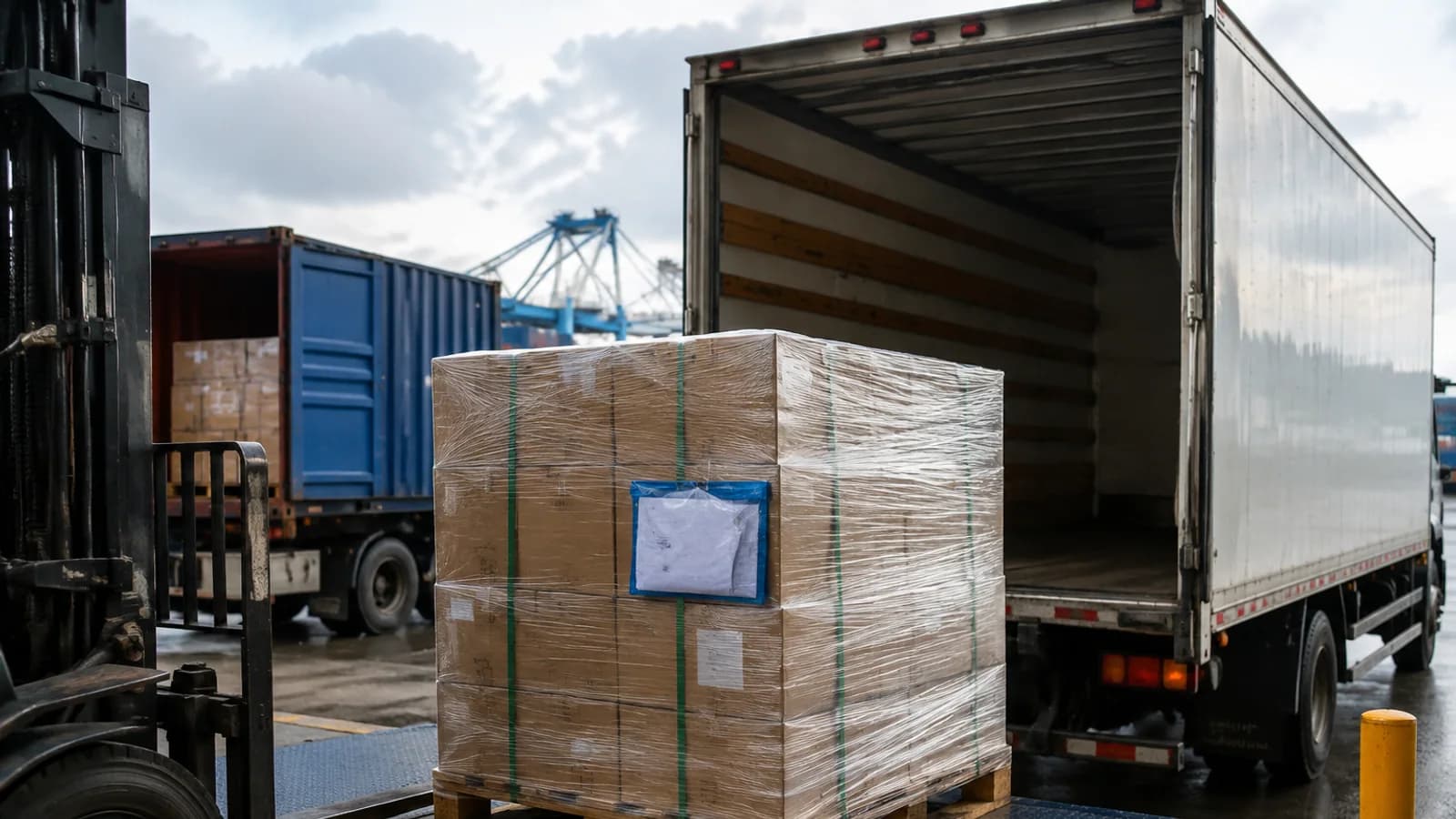
Landed-scope receiving handoff
A controlled supplier-to-warehouse plan with importer and duty responsibilities made explicit.
Plan this shipmentA delivered quote is reliable only when it names the importer, customs value, duty assumptions, exclusions and final receiving handoff. DDP does not replace customs law.
Ranges are not guarantees. Origin, customs, delivery and receiving are confirmed separately.

The operating plan must continue through the next controlled handoff.
Make every handoff visible.
- Legal importer
- Duty and tax assumptions
- Destination exclusions
- Appointment and rejection recovery
landed scope audit for fulfillment inbound
This service is for sellers seeking one coordinated origin-to-warehouse scope while keeping the legal importer, customs value, duties, exclusions and final receiving responsibilities visible.
DDP shipping from China to Amazon FBA is reliable only when the written plan names the lawful importer, customs basis, duty and tax assumptions, included services and final-delivery exclusions. DDP allocates seller responsibility under an Incoterm; it does not override customs law or make Amazon the importer.
Reviewed 11 August 2026. Shipment-specific confirmation is required before booking.Build the plan from confirmed inputs.
- Incoterm
- DDP or another named delivered term with an exact place
- Legal control
- Importer, broker authority, classification, value and origin
- Commercial control
- Duties, taxes, fees, exclusions and validity
- Receiving control
- Shipment references, appointment and rejection recovery
What door-to-door should actually cover
A useful door-to-door plan connects supplier pickup, export handling, main transport, destination handling, customs coordination and final delivery to the named warehouse. Each quotation should identify the exact start and end points and whether cargo is collected from a factory, consolidation warehouse, port or airport.
The term all-in is not a scope. Ask for a list of included and excluded costs, including exams, storage, demurrage, waiting time, appointment work, redelivery and destination changes. A low total can hide assumptions that become expensive after arrival.
Importer responsibility under DDP
DDP places extensive obligations on the seller, but the destination country still requires a legitimate import structure. The parties must identify who can legally act as importer, who appoints the broker and who supplies classification, valuation and product-control evidence.
Amazon or another fulfillment warehouse is not automatically the importer of record. Avoid arrangements that obscure the importer, undervalue cargo or use an unrelated entity without documented authority. The seller and buyer should obtain customs or tax advice for their specific transaction.
Duties, taxes and customs assumptions
The landed plan should show the tariff classification, customs value method, country of origin and any additional duty assumption used for pricing. Duties and taxes can change the commercial comparison more than the main freight rate.
High-risk facts require current official sources and broker confirmation. If classification, Section 301 treatment, GST, product admissibility or importer status is uncertain, the quote should remain conditional and the cargo should not be released automatically.
Final delivery to FBA, 3PL or DTC warehouses
Delivered responsibility continues beyond customs release. The provider needs the current address, shipment references, labels, pallet or carton data, receiving hours and appointment requirements. The plan should identify whether it ends at proof of delivery or includes receiving follow-up.
Rejection, missed appointments and destination changes need a recovery owner. Confirm storage, waiting and redelivery charges before dispatch. When inventory is time-critical, leave enough buffer between customs release and the required sellable-stock date.
How to compare delivered quotations
Provide the same cargo, value, Incoterm, importer, route, destination and required date to every provider. Compare the breakdown rather than only the total. Mark every amount as fixed, estimated, excluded or payable directly to an authority or third party.
A responsible delivered plan exposes uncertainty. It should state the validity period, exchange-rate or duty assumptions, carrier schedule, prohibited goods and events that trigger re-quotation. Keep the written plan with the commercial and customs file.
Questions to resolve before release.
Answers are planning guidance. Current carrier, customs, tax, product and receiving rules still require shipment-specific confirmation.
Does DDP mean the freight forwarder is the importer?
No. DDP allocates contractual responsibility, while importer status is governed by destination law and the actual transaction. Name and verify the importer before shipment.
Can Amazon be listed as the importer of record?
Amazon receiving facilities should not be assumed to act as importer. Follow current marketplace guidance and establish a legitimate importer and broker process independently.
Is DDP always cheaper than DAP?
No. Compare the same scope, importer arrangement, duties, taxes, destination services and exceptions. The better term depends on the parties' legal and operational capabilities.
What costs are often excluded from door-to-door quotes?
Common exclusions can include customs exams, storage, demurrage, waiting time, appointment changes, rejected delivery, remote areas, duty changes and product-agency work.
Define what a successful warehouse handoff means.
Send the receiving destination, product, finished load data, factory release date and required check-in window.
Build the brief