
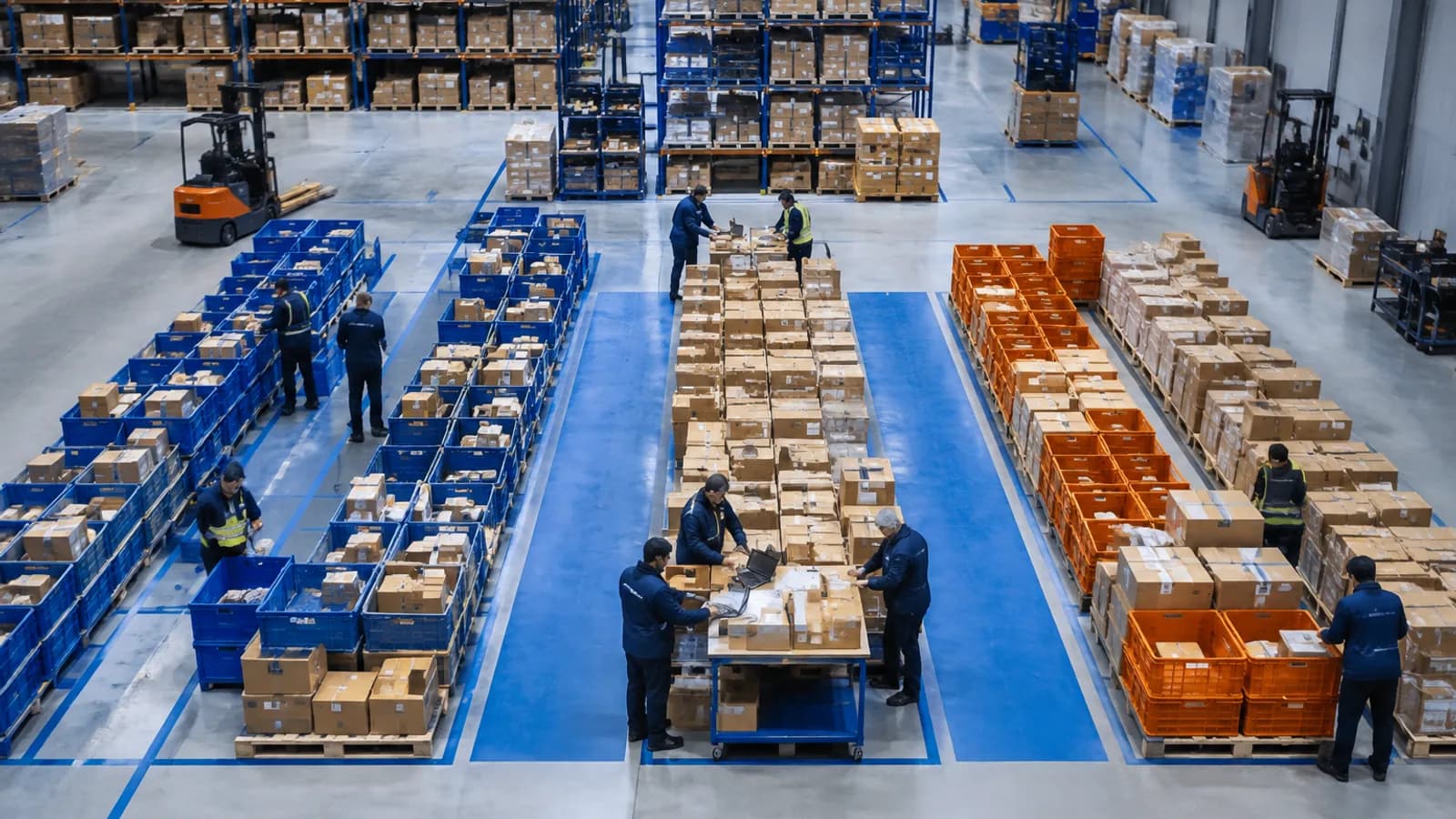
DTC brand receiving path
Shape mode, channel allocation and customs around the date inventory becomes sellable.
Build this inboundReceiving requirements enter the plan before pickup.
Importer data and warehouse data describe different responsibilities. Both must be complete.
- Launch or replenishment date
- Channel inventory split
- Importer setup
- Receiving availability

Physical delivery and inventory acceptance remain separate records.
Plan to inventory availability, not proof of delivery.
Delivery, receiving, discrepancy resolution and stock release are separate milestones.
DTC inventory receiving handoff
This solution is for direct-to-consumer brands moving inventory from Chinese suppliers to their own warehouse or a fulfillment partner in the United States or Canada.
Shipping inventory from China to a DTC warehouse should begin with the launch or replenishment date, channel allocation and receiving capacity. Build backward through put-away, delivery, customs and transport, then choose ocean, air or a split plan based on the value of earlier sellable stock.
Reviewed 11 August 2026. Shipment-specific confirmation is required before booking.Build the plan from confirmed inputs.
- Commercial target
- Launch, promotion or replenishment availability date
- Allocation
- DTC, marketplace, retail or reserve quantities
- Import
- Named importer, broker and landed-cost assumptions
- Receiving
- Inbound capacity, SKU setup and discrepancy workflow
Plan to the launch or stockout risk
Define the date inventory must be available for orders, not simply delivered. Include receiving, quality checks, put-away, system availability and any kitting or channel allocation after arrival.
Quantify the impact of a delay by SKU. This supports a rational split between faster replenishment and lower-cost base inventory instead of choosing one mode for every unit.
Allocate inventory before international release
Decide how many units go to DTC, FBA, retail, wholesale or reserve stock. Supplier packing, carton markings, labels and destination files should preserve that allocation.
If several suppliers feed one launch, use consolidation with a clear cutoff and late-cargo rule. Do not let one unfinished SKU delay all available products without an explicit commercial decision.
Build the landed and import plan
Name the importer and broker, then validate product description, classification, value, origin, duties, taxes and product controls. A DTC brand remains responsible for accurate commercial data even when a forwarder coordinates the move.
Compare Incoterms under the same scope. A delivered quote should state the importer, duty assumptions and exclusions rather than hiding them inside an all-in number.
Match transport to product economics
Ocean supports planned volume; air can protect contribution during a launch or stockout; express fits eligible small replacements. Use actual cartons and chargeable weight, not supplier estimates.
Include origin handling, customs and final delivery in every comparison. A faster main leg may not improve the launch if product evidence or warehouse receiving is unready.
Prepare the DTC receiving team
Send the warehouse SKU master, purchase order or ASN, carton and pallet data, routing guide and expected arrival window. Confirm capacity for unloading, inspection and put-away.
Reconcile delivered and available quantities. Capture damage, shortages and receiving delays so marketing, customer service and replenishment decisions use the actual stock position.
Questions to resolve before release.
Answers are planning guidance. Current carrier, customs, tax, product and receiving rules still require shipment-specific confirmation.
How early should a brand plan a China inbound?
Plan backward from sellable stock and include supplier production, origin cutoff, transport, customs, delivery and warehouse put-away plus a risk buffer.
Should launch inventory move by air?
Move only the quantity whose earlier availability justifies the cost. Compare a split air and ocean plan using actual contribution and stockout exposure.
Can one shipment serve DTC and FBA?
Yes, if quantities, labels, commercial data and destination splits remain controlled. Consolidate at origin and separate the final movements with clear records.
What should the DTC warehouse receive in advance?
Send SKU and purchase-order data, carton or pallet details, routing instructions, arrival window and an exception contact before delivery.
Define what a successful warehouse handoff means.
Send the receiving destination, product, finished load data, factory release date and required check-in window.
Build the brief