
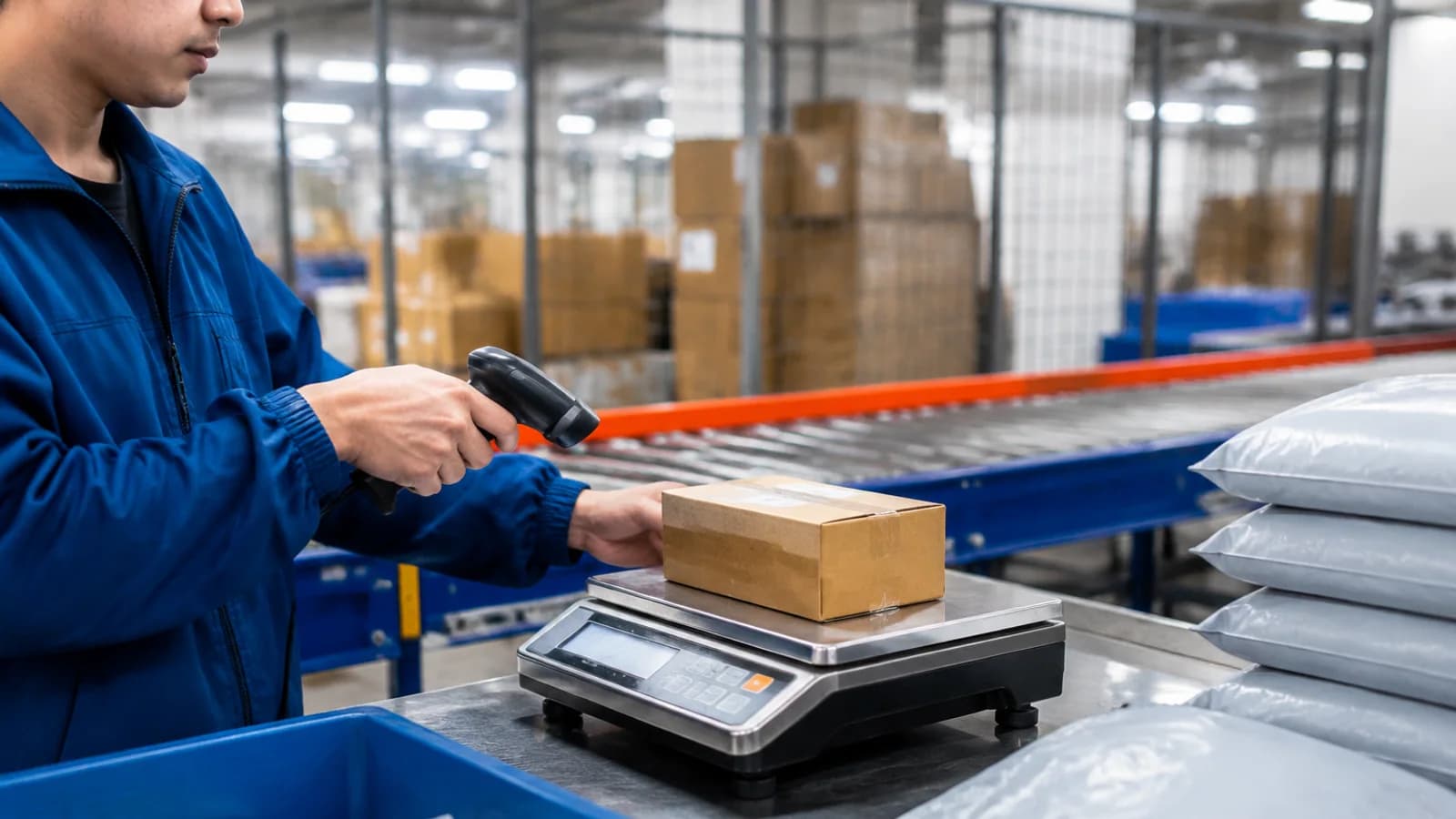
Small-parcel recovery intake
Courier movement for samples, replacement stock and eligible smaller carton shipments.
Plan this shipmentExpress can simplify small urgent movements, but dimensional weight, product restrictions and the receiving address still determine whether it is practical.
Ranges are not guarantees. Origin, customs, delivery and receiving are confirmed separately.

The operating plan must continue through the next controlled handoff.
Make every handoff visible.
- Piece dimensions
- Courier eligibility
- Commercial invoice
- Delivery exception plan
small parcel inventory recovery to fulfillment
This service is for samples, replacement stock and smaller urgent carton shipments that meet courier commodity, size, customs and destination-delivery requirements.
Express shipping from China can simplify small urgent FBA or 3PL inbounds, but it is not automatically door-to-door for every product. Confirm dimensional weight, commodity eligibility, importer responsibility, customs charges and whether the courier can complete the final receiving handoff.
Reviewed 11 August 2026. Shipment-specific confirmation is required before booking.Build the plan from confirmed inputs.
- Best use
- Eligible samples, replacements and small urgent replenishment
- Billing risk
- Dimensional weight and oversize-piece rules
- Entry control
- Accurate invoice, importer and product admissibility
- Delivery control
- Valid address, references and exception contact
Where express fits
Express is practical when a shipment is small enough for a courier network and the value of speed exceeds the dimensional-weight cost. Common uses include product samples, launch replacements, warranty stock and limited quantities needed before a larger air or ocean shipment arrives.
Do not split a larger shipment into courier parcels without checking customs, commercial and receiving consequences. Multiple parcels can create separate entries, tracking events and delivery exceptions, while a warehouse may not accept uncoordinated pieces.
Dimensional weight and piece limits
Courier charges frequently use dimensional weight, which can exceed actual weight for light cartons. Measure the final outside length, width and height and review both the shipment total and each piece. Oversize or overweight cartons can trigger surcharges or be rejected.
Packaging optimization should protect the product first, then reduce unused volume where practical. Recalculate after any carton change because a few centimeters across many pieces can materially alter the billable weight.
Commodity and customs eligibility
The courier still needs a commercial invoice with accurate product description, value, quantity, origin and importer details. A marketplace reference does not replace an importer or customs file. Product-agency requirements can apply even to small parcels.
Batteries, liquids, powders, cosmetics, food-contact items and other controlled goods require specific screening. Some products accepted by one courier service or origin station may be refused on another route. Obtain current acceptance before pickup.
FBA and 3PL receiving
A courier delivery address must match the current shipment or warehouse instruction. Confirm carton labels, reference numbers, delivery hours and whether parcels can arrive without an appointment. Keep an exception contact available if the courier reports an address or receiving problem.
Delivered status does not prove units are checked in and sellable. Preserve piece-level tracking and reconcile shortages or split deliveries with the receiving facility before closing the shipment.
What to send for an express review
Send origin, destination, ready date, carton count, individual measurements, total weight, product description, customs value, importer details and the required delivery date. Identify any battery or restricted characteristic clearly.
The review should return eligible service assumptions, dimensional weight, customs responsibility, estimated delivery range and known exclusions. If the shipment is too large or restricted, compare formal air freight instead of forcing it into a courier product.
Questions to resolve before release.
Answers are planning guidance. Current carrier, customs, tax, product and receiving rules still require shipment-specific confirmation.
Is express the same as air freight?
No. Express is an integrated courier service for eligible parcels, while air freight normally separates airline transport, customs brokerage and final delivery. Size, commodity and receiving requirements determine the better option.
Can a courier deliver directly to FBA?
A courier may deliver eligible parcels when the address, labels, references, importer and receiving conditions are correct. Confirm the current warehouse instruction before dispatch.
Why is express weight higher than actual weight?
The carrier may use dimensional weight based on carton volume. The greater of actual and dimensional weight, plus carrier rounding and surcharges, can determine the charge.
Are duties included in express shipping?
Not automatically. The payer, importer, duties, taxes, disbursement fees and exceptions depend on the service and entry. Confirm them before shipment.
Define what a successful warehouse handoff means.
Send the receiving destination, product, finished load data, factory release date and required check-in window.
Build the brief