
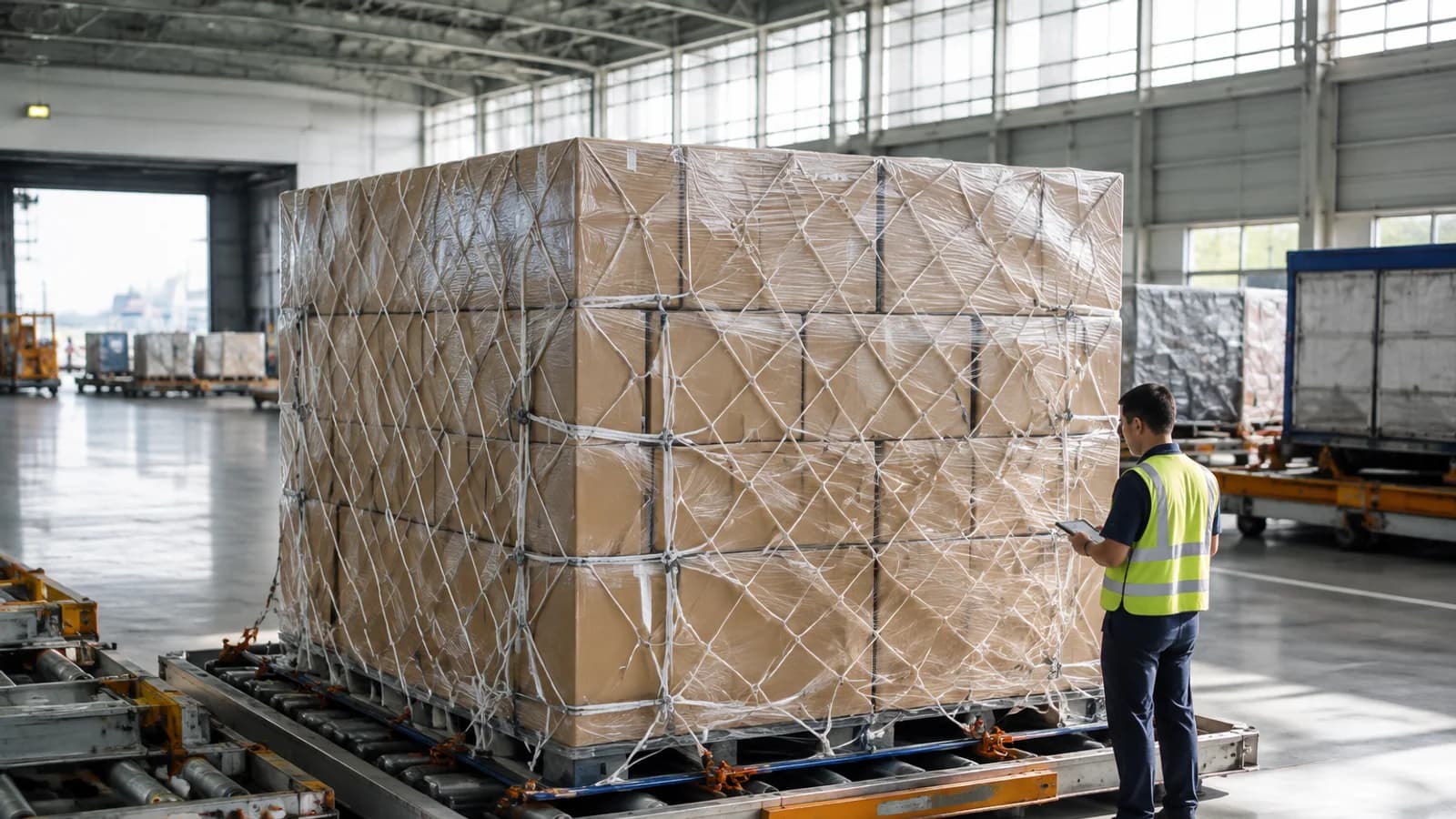
Priority replenishment recovery
Urgent inbound planning for launches, stockout recovery and higher-value inventory.
Plan this shipmentAir freight is useful when the value of earlier sellable inventory exceeds the added chargeable-weight cost. Pickup, uplift, customs and warehouse delivery must be planned as one timeline.
Ranges are not guarantees. Origin, customs, delivery and receiving are confirmed separately.

The operating plan must continue through the next controlled handoff.
Make every handoff visible.
- Actual and volumetric weight
- Cargo and battery screening
- Uplift and cutoff
- Customs and final delivery
urgent fulfillment replenishment recovery
This service is for launches, stockout recovery, seasonal replenishment and higher-value inventory where the commercial value of earlier usable stock can justify air transport.
Air freight from China to Amazon FBA should be planned from finished-carton chargeable weight and the required warehouse receiving date. Airport transit alone is not enough: pickup, screening, uplift, import clearance, final delivery and receiving must fit one controlled timeline.
Reviewed 11 August 2026. Shipment-specific confirmation is required before booking.Build the plan from confirmed inputs.
- Billing basis
- Greater of actual weight and carrier-defined volumetric weight
- Typical use
- Urgent replenishment, launches and higher-value inventory
- Acceptance
- Commodity, battery, piece-size and document screening
- Final milestone
- Warehouse receiving and inventory availability
When air freight creates commercial value
Air freight is useful when earlier stock protects a launch, restores an out-of-stock SKU or reduces a larger inventory penalty. The comparison should include lost contribution margin, advertising disruption and channel availability rather than treating freight cost in isolation.
A split plan often performs better than an all-air decision. Move the units needed to protect the immediate sales window by air and send the balance by ocean. Keep SKU quantities, labels, customs data and receiving references aligned across the separate movements.
Chargeable weight and carton design
Air carriers generally charge the greater of actual gross weight and volumetric weight under their rule. Finished outer dimensions matter because a light but bulky carton can cost more than expected. Measure every carton after final packing, not from a supplier's product specification.
The planning calculator can compare divisors such as 6,000 and 5,000 cubic centimeters per kilogram, but the booked carrier's divisor, rounding, minimums and per-piece rules control the final charge. Oversize pieces may also change aircraft or service eligibility.
Cargo screening and restricted characteristics
Give the forwarder a precise product description, composition, use, battery details and any liquids, powders, magnets or compressed components before accepting a plan. A vague description such as accessories or samples prevents reliable carrier screening.
Lithium batteries and other dangerous goods can require classification, test evidence, specific packaging, marks, declarations and carrier approval. Customs acceptance, airline acceptance and marketplace acceptance are separate checks. Do not dispatch cargo until each required control has a named owner.
Uplift, customs and final delivery
A booking request is not the same as confirmed uplift. The plan should identify cargo cutoff, export screening, booked flight, any connection, arrival handling and the trigger for escalation if the cargo is rolled or offloaded.
At destination, the importer and broker need commercial data before arrival. After release, the final-mile provider still needs a compatible vehicle, warehouse references and any appointment. Track airport arrival, customs release, delivered status and available inventory as separate milestones.
Inputs for an air-freight request
Provide origin, destination, ready date, required receiving date, carton count, individual dimensions, total gross weight, commodity, value, Incoterm and restricted-goods details. For mixed cartons, send a line-by-line packing list rather than an average dimension.
Ask for the chargeable-weight calculation, routing assumptions, included destination services and validity period. A reliable answer also states what can change the result, including packaging revisions, missed cutoffs, customs queries and unavailable delivery appointments.
Questions to resolve before release.
Answers are planning guidance. Current carrier, customs, tax, product and receiving rules still require shipment-specific confirmation.
How is air freight chargeable weight calculated?
Carriers generally compare actual gross weight with volumetric weight and bill the greater figure, subject to their divisor, rounding, minimum and per-piece rules. Use finished carton dimensions and confirm the selected carrier rule.
How fast is air freight from China to US FBA?
The airport-to-airport leg can be measured in days, but pickup, screening, uplift, customs and warehouse delivery extend the total. Plan to the receiving date rather than quoting only flight time.
Can batteries move by air freight?
Some battery configurations can move when classification, test evidence, packaging, marks, documents and carrier acceptance are complete. Eligibility depends on the exact battery and packing configuration.
Should I use air freight or express?
Air freight often fits larger urgent shipments with a separate broker and final-mile plan. Express can simplify eligible small shipments. Compare chargeable weight, restrictions, customs responsibility and receiving capability.
Define what a successful warehouse handoff means.
Send the receiving destination, product, finished load data, factory release date and required check-in window.
Build the brief