
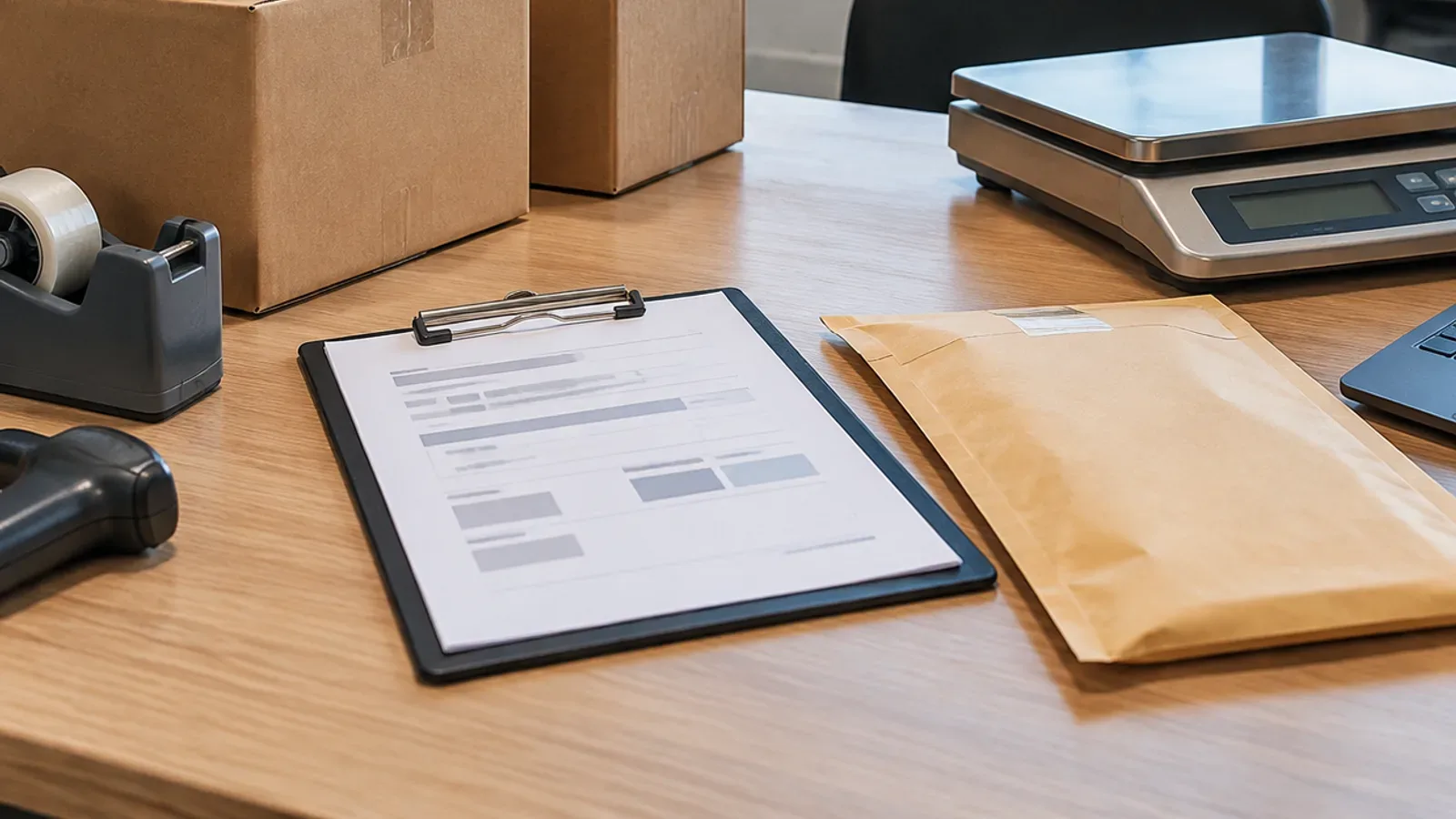
Direct answer: US FBA ocean consolidation release control is the shipment-specific gate that connects supplier cutoffs, origin warehouse facts, carton and SKU reconciliation, the importer and customs filer, ISF evidence, Amazon shipment data and the final receiving path. Release only lines whose physical records and documents agree; put uncertain, mismatched or unowned lines on hold or conditional release with an owner, deadline and stop event.
This guide is for sellers, importers, forwarders and 3PL teams grouping China-origin inventory for a US Amazon FBA or intermediary receiving path. It covers release control, not a guaranteed transit time, customs ruling or Amazon receiving promise. Reviewed: 30 September 2026.
Key facts before a consolidation release
- A release decision differs from vessel departure, ISF acceptance, customs release, delivery appointment and FBA check-in.
- Final received carton facts replace supplier estimates before the file is closed.
- Importer, broker or ISF filer, carrier, forwarder and receiver are separate roles.
- Every supplier remains traceable after cargo is grouped.
- Each exception needs an owner, decision time, affected quantity and stop event.
1. Define the release boundary and receiving date
Start with the event the business needs: cargo accepted by a US 3PL, delivered to an Amazon fulfillment center, or another named receiving outcome. Record the required inventory-available date, destination, receiving hours, appointment method and post-release owner. A sailing date or port arrival is only one milestone.
The Amazon FBA receiving path can connect shipment-plan data with delivery controls, but the legal importer and customs filer remain separate roles. Write the release boundary in the shipment brief: origin file complete and cargo authorized for export handling, or customs and final delivery package complete for post-release dispatch.
Work backward through supplier completion, pickup, origin warehouse receipt, measurement, consolidation cutoff, export handoff, vessel movement, US availability, entry or release, inland delivery, appointment and receiving confirmation. Put a time zone beside every date and preserve the prior version when a milestone moves.
2. Freeze supplier and purchase-order identity
Give each supplier a row with purchase-order reference, SKU or model, country of origin, planned ready date, expected units, cartons, dimensions, gross weight, packaging state and exception owner. The supplier-consolidation service can group cargo, but it should not erase which factory supplied a carton or which commercial record supports it.
Mark each row confirmed, at risk, received, discrepant or released. An estimate can reserve capacity, but it is not a final transport or customs fact. When one purchase order changes, identify whether the change affects containerization, invoice lines, ISF data, Amazon carton labels, customs data, receiving capacity or the required date.
Set one cutoff for the consolidated movement and a supplier-specific latest decision time. Decide in advance whether late cargo waits, ships later, short-ships or moves as a defined split. Keep the affected quantity visible rather than allowing a late line to silently change every total.
3. Reconcile cargo at the origin warehouse
At receipt, capture actual cartons, units, outer dimensions, gross weight, pallet or floor-load status, visible condition and arrival time. Compare the received record with the purchase order, supplier packing list and approved shipment plan. The carton reconciliation guide helps keep carton-to-SKU relationships intact.
Keep supplier cartons identifiable after consolidation. If cartons are repacked, combined, relabeled or palletized, record the old-to-new mapping, operator, time, reason and approver. A consolidated container may have one booking and several source records; the one booking does not make the cargo one undifferentiated quantity.
Use a three-way check for every line: commercial quantity, physically received quantity and quantity proposed for the US FBA path. Investigate extra, short, damaged or unidentified cartons before release. If a difference cannot be resolved, isolate the line and state whether the balance can move without it.
4. Build the US importer, broker and ISF file
The U.S. Customs and Border Protection importing guidance places responsibility for accurate entry information on the importer and its customs process. Name the legal importer, authorized broker or ISF filer, bond arrangement where relevant, business identifiers, escalation contact and who can approve a hold. A warehouse or Amazon fulfillment center is a destination, not automatically the importer.
For covered ocean cargo, map the current CBP Importer Security Filing requirements to the actual transaction. Preserve seller, buyer, importer, consignee, manufacturer or supplier, ship-to, origin, classification, stuffing-location, consolidator and bill evidence as applicable. The current 19 CFR Part 149 text controls the legal timing and definitions; a marketplace shipment ID does not replace an ISF field.
Use the US customs readiness file and US importer workbook to keep authority evidence connected to the broader entry file. The importer and qualified broker must confirm classification, value, origin, duties, admissibility and product-agency requirements for the actual goods. Do not infer legal status from a carrier dashboard or an accepted filing alone.
5. Align HTS, commercial data and physical cargo
Use the USITC Harmonized Tariff Schedule as a classification reference tied to the product facts. A supplier description such as accessory, gift or household item is not a classification rationale. Record the proposed heading, supporting characteristics, reviewer, date and unresolved questions for each distinct SKU or product family.
Reconcile commercial invoice lines, packing-list quantities, country of origin, declared value and received cartons. If the consolidation combines several factories, retain supplier-level evidence so a single container does not hide different descriptions or origin records. The customs broker or importer must decide the applicable entry treatment; this guide does not determine a tariff code or duty amount.
When a product, quantity, destination, stuffing location or bill reference changes, open a dated amendment row. State which records require correction: invoice, packing list, ISF, bill instructions, entry data, Amazon shipment plan or receiving labels. A clean-looking summary is not a substitute for controlled change history.
6. Align Amazon shipment data with the consolidated cargo
Open the current Amazon Seller Central shipment and routing requirements for the account and shipment. Record the shipment or delivery reference, destination, carton labels, carton contents, pallet instructions if applicable and the date the file was checked. Marketplace guidance can change with the account, product and fulfillment path.
Compare the Amazon plan with the consolidated carton map. A carton label should point to the intended shipment and remain associated with the physical carton after consolidation handling. If the warehouse rebuilds a pallet or changes carton composition, record whether new labels, carton contents or shipment references are required.
The Fulfillment Inbound API reference can help technical teams understand shipment objects and operations, but API data does not answer customs questions or guarantee receiving. Keep the marketplace path, commercial import file and physical warehouse record linked but independently verified.
7. Use release, conditional release and hold states
| State | When to use | Minimum record |
|---|---|---|
| Release | Received cargo, documents, destination and owners agree. | Version, approver, timestamp, affected lines and next milestone. |
| Conditional release | A limited issue is accepted without hiding its impact. | Exception, owner, deadline, quantity, cost exposure and stop event. |
| Hold | Unknown cargo, importer, destination, label or material entry risk could misdirect the load. | Physical control point, reason, escalation and next decision. |
Do not use conditional release to bypass an unresolved importer decision, missing ISF data, unknown destination, materially different quantity, missing product evidence or a label mapped to the wrong Amazon shipment. The inbound readiness checker can expose missing fields, but it cannot approve an entry or override a receiving instruction.
8. Pre-release consolidation checklist
- Required receiving date, destination, hours and appointment process are recorded.
- Each supplier and purchase order has a ready, at-risk, received or hold state.
- Actual carton count, SKU quantity, dimensions and gross weight are reconciled.
- Carton, pallet and relabel mappings survive consolidation handling.
- Importer, broker or ISF filer, business identifiers and bond dependencies are assigned.
- Commercial invoice, packing list, origin and product evidence match the released lines.
- ISF data, bill reference and any filer response are recorded for covered ocean cargo.
- Classification, value, duty, tax and admissibility questions are owned by importer or broker.
- Amazon shipment references, labels, carton contents and destination are current.
- Late-supplier, damaged-carton and count-difference actions are written.
- Release, conditional release or hold is approved by a named person and timestamped.
- Export handoff, vessel or booking reference and post-release delivery owner are recorded.
- Receiving proof, discrepancy evidence and usable-inventory date will close the file.
What happens after release
Release from the consolidation warehouse is not ISF acceptance, customs clearance or receiving confirmation. Keep separate milestones for export handoff, vessel departure, US cargo availability, entry or release, inland pickup, appointment, delivery, warehouse receipt, Amazon check-in and usable inventory. If one milestone changes, recalculate the next decision instead of repeating the original estimate.
After delivery, reconcile released, delivered, received and usable quantities. Attach the warehouse receipt, proof of delivery, damage or shortage notes, final carton map and any Amazon receiving discrepancy. The ocean LCL document pack can support the evidence bundle, while this US-specific record explains why each line proceeded.
Use the North America inbound plan form when the shipment file is ready. Ask the reviewer to state importer assumptions, entry scope, receiving endpoint, date range, exclusions and exception owners. A visible hold is safer than a clean-looking release built on estimated cartons or an unconfirmed destination.
Limitations and shipment-specific review
This checklist cannot determine a universal tariff classification, duty amount, product approval, carrier acceptance, ISF liability, Amazon appointment or guaranteed inventory date. CBP, the legal importer, broker, carrier, warehouse and Amazon account instructions control different parts of the shipment. Recheck them when the SKU, packaging, importer, destination, quantity or shipment reference changes.
Frequently asked questions
What does release control mean for a US FBA ocean consolidation?
It means the team compared received supplier cargo with the approved file, confirmed the importer and filing path, checked current Amazon destination and labels, assigned exceptions and decided which lines may proceed, which are conditional and which remain on hold.
Can a consolidator release cargo before the final packing list arrives?
A provisional plan may reserve capacity, but final release should use received carton counts, dimensions, weights, SKU quantities and product descriptions. Isolate or conditionally release a line when reliable facts are missing, and record who must close the gap.
Does an accepted ISF prove that US FBA cargo can be released?
No. ISF is a cargo-security filing, while entry admissibility, classification, value, duties, product rules, carrier handling and Amazon receiving are separate controls. Keep the ISF response with the file but verify each other handoff independently.
Who owns the customs decision in a US FBA consolidation?
The legal importer and its authorized customs broker or filer own the customs decision. A forwarder, warehouse or Amazon fulfillment center may provide data or receive cargo, but a destination address does not make that party the importer.
What should happen when one supplier misses the consolidation cutoff?
Mark the line at risk, preserve its identity and decide whether to wait, short-ship, move it later or split a defined quantity. Record the owner, cost and receiving impact. Do not let an unconfirmed line silently change the consolidated file.
Does customs release mean Amazon has checked in the inventory?
No. Port or customs release, inland delivery, appointment or receiving references, unloading and Amazon check-in are separate events. Keep the post-release delivery and receiving owner visible until inventory is acknowledged.
Official sources and review notes
- U.S. Customs and Border Protection: Basic Importing and Exporting
- U.S. Customs and Border Protection: Importer Security Filing 10+2
- Electronic Code of Federal Regulations: 19 CFR Part 149
- U.S. International Trade Commission: Harmonized Tariff Schedule
- Amazon Seller Central: FBA shipment and routing requirements
- Amazon Selling Partner API: Fulfillment Inbound API reference
Source note: These six official pages were opened and checked on 30 September 2026. CBP, the importer, broker and Amazon account-specific instructions remain controlling for the shipment.
Change log
30 September 2026: Initial guide covering supplier cutoff, origin reconciliation, importer and ISF evidence, HTS review, Amazon shipment alignment, release states and post-release receiving closure. Recheck all source pages and the live receiver instruction before dispatch.